How Does Precision During Cabinet Fabrication Affect the Final Installation and Alignment?
Introduction
Precision during cabinet fabrication plays an important role in determining the quality, appearance, and functionality of the final installation. From kitchen cabinets and wardrobes to TV wall units and custom storage solutions, accurately fabricated components are essential for achieving proper alignment and a professional finish.
Cabinet fabrication involves more than simply cutting boards and assembling panels. Accurate measurements, precise cutting, proper drilling, correct edge finishing, and consistent assembly all contribute to how well cabinets fit together during installation.
When cabinet components are fabricated accurately, installation becomes more efficient and the finished cabinetry has consistent gaps, properly aligned doors, smooth-running drawers, and clean connections between adjoining units.
For homeowners and property developers planning custom cabinetry in Kenya, understanding the relationship between fabrication precision and installation quality can help when evaluating the quality of a cabinetry project.
What Is Precision in Cabinet Fabrication?
Precision in cabinet fabrication refers to the accuracy and consistency with which cabinet components are measured, cut, drilled, edged, assembled, and prepared for installation.
Every component needs to be produced according to the approved dimensions and design specifications. Even small differences between components can affect the final alignment when several cabinets are installed next to one another.
Precision can involve:
- Accurate cabinet measurements
- Consistent panel dimensions
- Straight and clean board cuts
- Correct drilling positions
- Accurate hinge and drawer positioning
- Consistent edge banding
- Proper cabinet assembly
- Correct placement of hardware
- Accurate door and drawer dimensions
The greater the fabrication accuracy, the easier it is to achieve a consistent final installation.
How Does Precision During Cabinet Fabrication Affect Final Installation?
1. It Improves Cabinet Alignment
Accurately fabricated cabinets can be positioned next to one another with consistent dimensions and spacing.
This is particularly important for kitchen cabinets, wardrobes, and large wall-mounted units where several individual sections form one continuous installation.
When cabinet boxes have consistent dimensions, installers can achieve straighter horizontal and vertical lines across the completed project.
2. It Creates Consistent Gaps
Cabinet doors and drawers require carefully controlled gaps to open and close correctly while maintaining a balanced appearance.
Precision during fabrication helps ensure that doors and drawers are manufactured to the correct dimensions.
Consistent gaps are especially noticeable on modern handleless cabinets and minimalist cabinetry, where even small variations can affect the appearance of the entire installation.
3. It Reduces On-Site Adjustments
Accurate fabrication reduces the amount of cutting, drilling, trimming, and modification required during installation.
This can make the installation process more efficient because installers can focus on positioning, securing, leveling, and adjusting the finished cabinet components.
Excessive modifications on site may also affect the appearance and finish of cabinet components.
4. It Improves Door Alignment
Cabinet doors need to sit correctly within their frames and maintain consistent spacing with neighboring doors.
Precise fabrication ensures that hinge positions and door dimensions are consistent. Once the cabinets are installed and leveled, the hinges can then be adjusted to achieve the required alignment.
This is important for kitchens, wardrobes, bathroom cabinets, and other fitted cabinetry.
5. It Improves Drawer Performance
Drawer boxes need accurate dimensions to work correctly with their runners.
If drawer components are not fabricated accurately, drawers may become difficult to open, sit unevenly, or create inconsistent gaps.
Precision in fabrication helps ensure that drawer boxes and runner positions correspond correctly with the cabinet structure.
Why Accurate Measurements Matter Before Cabinet Fabrication
Fabrication precision starts before the first board is cut.
Accurate site measurements provide the information required to manufacture cabinets according to the actual installation space.
Measurements may need to account for:
- Wall-to-wall dimensions
- Floor levels
- Ceiling height
- Wall irregularities
- Electrical outlets
- Plumbing points
- Windows and doors
- Appliances
- Countertop dimensions
- Existing structures
- Required clearances
A detailed measurement process helps prevent discrepancies between the design and the actual site conditions.
The Role of CNC and Precision Cutting in Cabinet Fabrication
Modern cabinet fabrication can use specialized cutting and drilling equipment to improve dimensional consistency.
Computer-controlled machinery can help produce repeated components with consistent measurements, particularly when a project contains multiple similar cabinet units.
Precision cutting can help achieve:
- Consistent panel dimensions
- Accurate joints
- Repeatable component sizes
- Cleaner edges
- Consistent drilling positions
- Better component compatibility
However, machinery is only one part of the process. Accurate design information, material preparation, hardware selection, assembly, and quality control remain important throughout fabrication.
How Fabrication Precision Affects Kitchen Cabinet Installation
Kitchen cabinets often contain multiple adjoining units, including base cabinets, wall cabinets, tall units, drawers, pantry units, and specialized storage sections.
Because these components need to work together, fabrication accuracy is particularly important.
A small dimensional error in one cabinet can affect neighboring units and create visible inconsistencies across the kitchen.
Precision helps installers achieve:
- Straight cabinet runs
- Consistent door gaps
- Proper drawer alignment
- Correct appliance clearances
- Accurate countertop support
- Consistent cabinet heights
- Clean connections between units
How Precision Affects Wardrobe Installation
Custom wardrobes often contain multiple doors, drawers, shelves, hanging sections, and storage compartments.
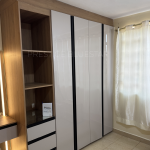
Full-height wardrobes require particularly careful fabrication because the vertical lines of the cabinet can be highly visible across the wall.
Accurate fabrication helps ensure that wardrobe doors remain evenly spaced and that internal components fit correctly within the available cabinet space.
For sliding wardrobes, fabrication accuracy is also important for the positioning of tracks, panels, and internal components.
Precision and Cabinet Hardware
Cabinet hardware must correspond correctly with the fabricated components.
This includes:
- Hinges
- Drawer runners
- Handles
- Drawer systems
- Cabinet connectors
- Shelf supports
- Sliding mechanisms
- Lift-up systems
Incorrect drilling or positioning can prevent hardware from operating correctly.
For example, if hinge cup positions are inconsistent, cabinet doors may not align properly even when the cabinet boxes themselves are correctly installed.
Fabrication Precision and On-Site Installation Conditions
Even accurately fabricated cabinets need to be installed correctly.
Walls and floors are not always perfectly level, square, or straight. Professional installation therefore involves checking the site conditions and making appropriate adjustments.
Installers may need to:
- Level cabinet units
- Check vertical alignment
- Account for uneven walls
- Maintain required clearances
- Adjust hinges
- Align drawer fronts
- Secure cabinets correctly
- Install fillers where required
The goal is to accommodate normal site variations without compromising the finished appearance.
What Happens When Cabinet Fabrication Is Not Precise?
Poor fabrication accuracy can create several installation problems.
These may include:
- Uneven cabinet gaps
- Misaligned doors
- Difficult-to-operate drawers
- Incorrect hardware positioning
- Uneven cabinet heights
- Excessive on-site modifications
- Visible inconsistencies
- Longer installation times
- Material wastage
- Additional project costs
In severe cases, incorrectly fabricated components may need to be remade before installation can be completed properly.
How to Maintain Precision During Cabinet Fabrication
A quality cabinet fabrication process should include several stages of checking.
1. Verify Measurements
Site measurements should be checked against the approved design before fabrication begins.
2. Confirm the Design
Cabinet dimensions, internal layouts, door configurations, and hardware positions should be confirmed before cutting materials.
3. Use Appropriate Fabrication Equipment
Suitable cutting, drilling, edging, and assembly equipment can improve consistency.
4. Inspect Components
Fabricated panels should be checked for dimensions, edges, drilling positions, and visible defects.
5. Conduct Quality Control Before Delivery
Cabinet components should be checked before they leave the fabrication facility or workshop.
6. Test-Fit Where Necessary
For complex cabinetry, test-fitting components before final installation can identify potential issues early.
Why Choose Professional Cabinet Fabrication and Installation?
Professional cabinetry requires coordination between design, measurement, fabrication, delivery, and installation.
A properly managed process helps ensure that the final cabinets reflect the approved design while fitting the available space correctly.
For kitchens, wardrobes, TV wall units, and other custom cabinetry, professional fabrication can also help achieve consistent finishes and functional storage layouts.
Prestige Bluestar provides custom interior solutions in Nairobi and across Kenya, including kitchen cabinetry, wardrobes, TV wall units, and other fitted interior elements.
The process can involve consultation, measurements, design development, material selection, fabrication, and professional installation according to the project requirements.
Frequently Asked Questions
Why is precision important in cabinet fabrication?
Precision ensures that cabinet components have the correct dimensions and positions, making it easier to achieve proper alignment, consistent gaps, and smooth operation during installation.
Can poor fabrication affect cabinet installation?
Yes. Incorrect dimensions, drilling positions, or component sizes can result in misaligned doors, uneven gaps, difficult drawer operation, and additional on-site modifications.
Does accurate fabrication eliminate the need for installation adjustments?
Not necessarily. Site conditions such as uneven floors and walls can still require adjustments. However, accurate fabrication reduces unnecessary modifications and makes final installation easier.
How does precision affect kitchen cabinet alignment?
Accurate fabrication helps adjoining kitchen cabinets maintain consistent heights, widths, gaps, and door lines, contributing to a cleaner finished installation.
Does precision matter for wardrobes?
Yes. Precision is particularly important for wardrobes because multiple doors, shelves, drawers, and internal sections need to work together within a defined space.
Can precise cabinet fabrication reduce installation time?
Accurate components can reduce unnecessary cutting, drilling, and modifications on site, potentially making installation more efficient.
Conclusion
Precision during cabinet fabrication directly affects the quality of the final cabinet installation. Accurate measurements, cutting, drilling, edging, assembly, and hardware positioning provide the foundation for properly aligned cabinets.
When fabrication is precise, installers can achieve consistent gaps, aligned doors, smooth-running drawers, straight cabinet runs, and a cleaner overall finish. Although professional installation must still account for site conditions, accurate fabrication significantly reduces avoidable installation problems.
For homeowners investing in custom kitchens, wardrobes, TV wall units, and other fitted cabinetry, fabrication quality should therefore be considered alongside design and material selection.
Ready for Professionally Fabricated and Installed Cabinets?
Planning custom kitchen cabinets, wardrobes, TV wall units, or other fitted cabinetry in Kenya? Prestige Bluestar provides customized interior solutions designed around your space, storage requirements, preferred materials, and project specifications.
Call or WhatsApp: 0714 444 516 | 0745 730 042
Based in Westlands, Nairobi and serving clients countrywide.
Onsite consultation fee applies before quotation and project commencement.