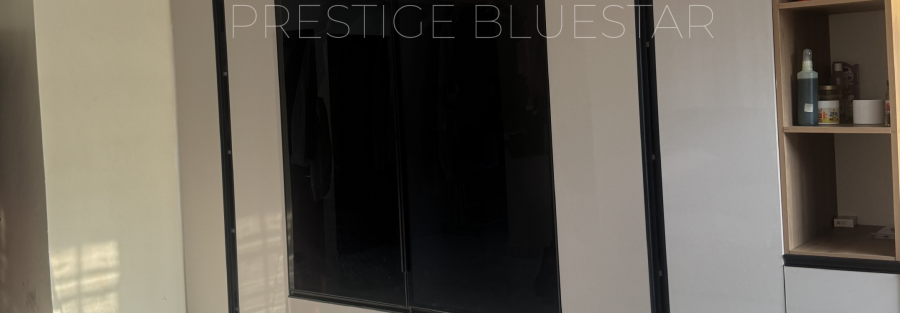
What’s the Ideal Wardrobe Depth?
What’s the ideal wardrobe depth? For most standard built-in wardrobes, a depth of approximately 600 mm (60 cm) is a practical starting point because it provides enough space for most hanging clothes while maintaining comfortable access.
However, the ideal wardrobe depth depends on the type of clothes being stored, available bedroom space, door system, internal storage configuration, and whether the wardrobe is freestanding, built-in, or part of a walk-in closet.
A wardrobe that is too shallow may make hanging clothes difficult to organize, while an unnecessarily deep wardrobe can waste floor space and make items at the back difficult to reach.
For custom wardrobes, the best approach is to design the depth around both storage requirements and available room space.|

Introduction
Wardrobe dimensions are often treated as standard measurements, but there is no single depth that works perfectly for every bedroom.
A children’s wardrobe, a compact bedroom wardrobe, a master bedroom wardrobe, and a walk-in closet may all require different dimensions.
When designing a custom wardrobe in Kenya, it is important to consider how the wardrobe will actually be used rather than simply copying a standard measurement.
The right wardrobe depth should allow clothes to hang comfortably, provide enough room for shelves and drawers, and leave sufficient circulation space in the bedroom.
What Is the Standard Wardrobe Depth?
A commonly used depth for a conventional built-in wardrobe is approximately 600 mm.
This depth generally provides adequate space for:
- Shirts.
- Dresses.
- Jackets.
- Trousers.
- Suits.
- Hanging rails.
- Shelves.
- Drawers.
- Wardrobe accessories.
However, the total external depth may need to account for doors, drawer fronts, back panels, internal fittings, and construction details.
This is why a custom wardrobe should be designed and measured according to the actual space rather than relying only on a standard dimension.
Why Wardrobe Depth Matters
Choosing the correct wardrobe depth affects both functionality and bedroom space.
A wardrobe that is too shallow may:
- Make clothes difficult to hang.
- Cause garments to touch the doors.
- Reduce usable storage.
- Limit hanging-rail options.
- Make shelves less practical.
A wardrobe that is too deep may:
- Reduce bedroom circulation space.
- Make items at the back harder to reach.
- Make the room feel smaller.
- Create unnecessary storage space.
- Affect door and drawer accessibility.
The objective is to find the right balance between storage capacity and room usability.
Ideal Wardrobe Depth for Hanging Clothes
For conventional front-facing hanging rails, approximately 600 mm is generally a practical depth.
This allows garments to hang without being excessively compressed.
However, the required space can vary depending on:
- Type of clothing.
- Hanger size.
- Door system.
- Internal fittings.
- Back panel thickness.
- Rail configuration.
For bedrooms with limited space, alternative wardrobe configurations can be considered instead of simply reducing the depth.
Wardrobe Depth for Shelves and Drawers
Not every wardrobe section needs to function exactly like the hanging area.
Shelves can be customized according to the items being stored.
For example:
- Folded clothes may require less depth than hanging garments.
- Shoe storage can use specialized compartments.
- Accessories can use shallow drawers.
- Bags may require larger compartments.
- Linen storage can use wider shelves.
Custom internal layouts allow the available wardrobe space to be used more efficiently.
What Is the Ideal Walk-In Wardrobe Depth?
Walk-in wardrobes require a different approach because you have to consider both the wardrobe depth and the walking aisle.
A walk-in wardrobe can include:
- Hanging sections.
- Shelving.
- Drawers.
- Shoe storage.
- Dressing areas.
- Mirrors.
- Islands.
- Lighting.
The wardrobe itself can follow practical storage dimensions, but sufficient clearance must remain between opposing storage sections where applicable.
The overall room dimensions therefore become more important than simply choosing a cabinet depth.
Ideal Wardrobe Depth for Small Bedrooms
If your bedroom is compact, using a standard wardrobe depth without considering circulation can make the room feel cramped.
A professional wardrobe design can help by:
- Optimizing internal storage.
- Using full-height cabinetry.
- Adding customized drawers.
- Incorporating adjustable shelves.
- Selecting appropriate door systems.
- Creating dedicated storage zones.
Where space is particularly restricted, the wardrobe design should be developed around the available wall and circulation area.
This is where custom wardrobe design can provide a major advantage over ready-made units.
Sliding Door vs Hinged Door Wardrobe Depth
The type of wardrobe door can influence the overall design.
Hinged Door Wardrobes
Hinged doors require clearance in front of the wardrobe because the doors swing outward.
This should be considered when positioning:
- Beds.
- Bedside tables.
- Dressing tables.
- Chairs.
- Other furniture.
Sliding Door Wardrobes
Sliding doors do not require the same swing clearance, making them useful where bedroom floor space is limited.
However, the sliding-door mechanism itself occupies part of the front/internal configuration.
The wardrobe should therefore be designed as a complete system rather than choosing depth independently of the door type.
How to Choose the Right Wardrobe Depth
Before finalizing your wardrobe dimensions, consider these factors:
1. What Will You Store?
A wardrobe designed mainly for hanging clothes may have different requirements from one designed for folded clothes, shoes, bags, or accessories.
2. How Much Bedroom Space Is Available?
Measure the available wall and the circulation area in front of the proposed wardrobe.
3. What Door System Will You Use?
Sliding and hinged doors have different space requirements.
4. What Internal Storage Do You Need?
Drawers, shelves, shoe racks, pull-out accessories, and hanging rails can affect the internal configuration.
5. What Is the Ceiling Height?
Full-height wardrobes can maximize storage while making better use of vertical space.
6. Do You Need a Custom Design?
Custom wardrobes allow the dimensions to be adapted to the actual room rather than forcing the room to accommodate a standard unit.
Common Wardrobe Design Mistakes
Making the Wardrobe Too Shallow
This can compromise hanging space and make clothes difficult to organize.
Making the Wardrobe Unnecessarily Deep
More depth does not automatically mean better storage.
Ignoring Door Clearance
Hinged doors require adequate space to open comfortably.
Wasting Vertical Space
Stopping the wardrobe significantly below the ceiling can leave valuable storage unused.
Not Planning Internal Storage
A large wardrobe can still be inefficient if it lacks the right combination of hanging space, shelves, drawers, and accessories.
Measuring Without Considering Finishes
Board thickness, doors, back panels, handles, and internal fittings can affect the final dimensions.
Frequently Asked Questions
What’s the ideal wardrobe depth?
Approximately 600 mm is a practical standard starting point for many conventional built-in wardrobes, but the ideal depth depends on the room, clothing requirements, door system, and internal storage design.
Is 600 mm enough for a wardrobe?
For many standard hanging wardrobes, 600 mm provides practical space. However, the final external and internal dimensions should be determined according to the construction and storage requirements.
Can a wardrobe be less than 600 mm deep?
Yes, but reducing the depth can affect hanging space and garment clearance. A custom design may be required to make a shallower wardrobe practical.
Are sliding wardrobes better for small bedrooms?
Sliding wardrobes can be useful in smaller bedrooms because the doors do not swing into the room. However, the complete wardrobe configuration should still be planned around the available space.
Should wardrobes go all the way to the ceiling?
Full-height wardrobes can maximize storage and reduce unused space above the cabinetry. Whether they are appropriate depends on ceiling height, design preferences, and access requirements.
What is the best wardrobe depth for a walk-in closet?
There is no single dimension for every walk-in closet. The storage depth, aisle clearance, room dimensions, and internal layout should all be considered together.
Conclusion
What’s the ideal wardrobe depth? For many conventional built-in wardrobes, approximately 600 mm is a practical starting point for comfortable hanging storage. However, the ideal measurement depends on the room dimensions, clothing requirements, internal storage, door system, and overall wardrobe design.
The best wardrobe is not necessarily the deepest one. It is the one that provides efficient storage while preserving comfortable movement and making good use of the available space.
At Prestige Bluestar, we design and install custom wardrobes and walk-in closets based on your room dimensions, storage needs, preferred finishes, and interior style.
Ready for a Custom Wardrobe?
If you are planning a new wardrobe or walk-in closet, professional measurements and design planning can help you maximize every available centimetre.
Contact Prestige Bluestar:
📞 +254 714 444 516 | +254 745 730 042
📧 info@prestigebluestar.com
🌐 www.prestigebluestar.com
📍 Westlands, Nairobi, Kenya
Serving homeowners and businesses across Kenya.
Professional onsite consultation fees apply and are redeemable when you proceed with your project.